


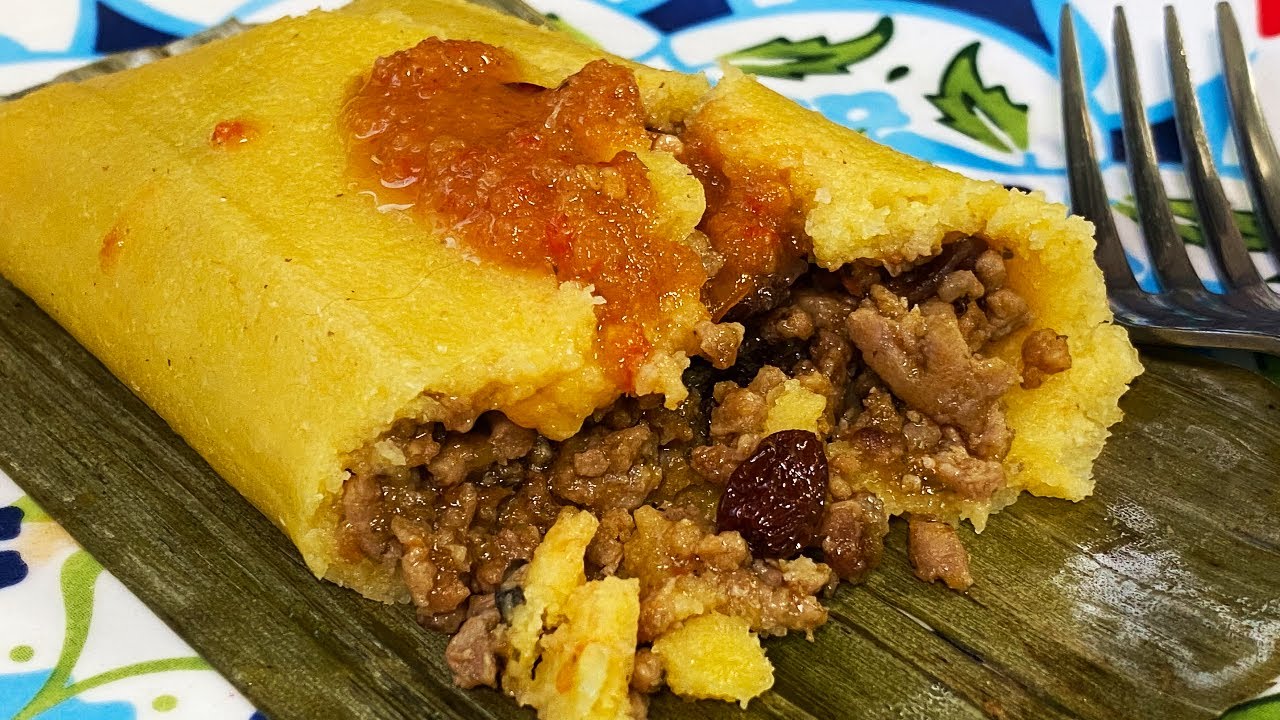
The Trinidad Chicken Pastelle Recipe is one of those dishes that lets you know Christmas has arrived in Trinidad and Tobago. While beef pastelles are the traditional standard, this chicken version is the one I make for my family every year, and it signals the real start of our holiday cooking. It keeps the familiar flavors and techniques we all grew up with, but uses ground chicken for a lighter filling that still delivers plenty of depth.
Ground chicken gives the herbs, stock, and seasonings room to shine. Simple additions like dried cranberries, capers, olives, and good chicken stock create a filling that is savory with just enough sweetness to feel right for Christmas morning. It may be a little different from what purists expect, but it stays true to the spirit of pastelles and fits perfectly alongside the classics on the table.
Want to save this recipe?
Just enter your email and get it sent to your inbox. You’ll also get new recipes and a free monthly menu plan!
I still remember my neighbor across the road from where our family home is in Guaracara. She worked long days filling large orders of beef pastelles for the caterers she worked with, and on a few occasions, she would bring some home for us. Those pastelles, still warm and wrapped in banana leaf (no foil in those days), are memories I carry with me every Christmas. This chicken pastelle is my way of honoring that tradition while sharing a version my family truly enjoys, using a bit of dried cranberries to give it a subtle Canadian touch.
If you want to add a proper Caribbean touch to your Christmas menu, this Trinbagonian Chicken Pastelle Recipe is a must.
INGREDIENT GUIDE
Ground Chicken: This forms the base of the filling and creates a lighter alternative to the traditional beef pastelle.
Olive Oil: Used to sauté the chicken and prevent it from drying out.
Black Pepper: Adds gentle heat and depth.
Scallions: A key flavor base in Caribbean cooking.
Thyme: Brings warmth and a familiar herbal note.
Parsley: Adds freshness and balance.
Tomato: Helps build moisture and body in the filling.
Capers: Introduce a salty, briny contrast.
Chicken Stock: Used in both the filling and the cornmeal dough for added flavor.
Pimento Peppers: Contribute aroma and mild heat without overpowering the dish.
Dried Cranberries: Add subtle sweetness that works beautifully for Christmas pastelles.
Raisins: A traditional element that adds texture and sweetness.
Olives: Bring a savory bite that balances the sweet elements.
Salt: Enhances and ties all the flavors together.
Butter: Adds richness to the cornmeal mixture.
Corn Meal: Forms the outer layer that wraps the filling.
Banana Leaves: Used for wrapping and steaming, adding aroma and authenticity.
SHOPPING MADE EASY
• Banana leaves are usually found frozen at Caribbean or Latin grocery stores.
• Look for fine cornmeal rather than coarse polenta for the best texture.
• Pimento peppers may be labeled as seasoning peppers in Caribbean markets.
• Capers and olives are typically found in the condiment or international aisle.
COOKING NOTES FROM THE KITCHEN
• Ground chicken cooks quickly, so keep the heat at medium to avoid drying it out.
• Allow the filling to cool completely before assembling the pastelles.
• The cornmeal dough should be soft and slightly tacky, but firm enough to hold together.
• Banana leaves should be wiped clean and dry before using.
• Pastelles freeze very well and are ideal for make-ahead Christmas cooking.

Trinidad Chicken Pastelle Recipe.
Description
A classic Trinidad Christmas favorite, this Trinbagonian Chicken Pastelle Recipe features seasoned ground chicken simmered with herbs, dried fruit, and aromatics, then wrapped in cornmeal dough and steamed in banana leaves for a festive Caribbean holiday dish.
Ingredients
Instructions
-
Heat 1 tablespoon of the olive oil in a wide pan over medium heat at about 350°F (175°C). Add the ground chicken and break it up into small pieces as it cooks. Cook for 7 to 10 minutes until lightly browned.

-
Add the black pepper, scallions, thyme, parsley, tomato, and capers. Stir well.

-
Add 1 1/2 cups of the chicken stock, bring to a boil, then reduce to a gentle simmer at 212°F (100°C). Cook for 20 to 25 minutes.

-
Stir in the salt, the pimento peppers, cranberries, raisins, and olives. Cook for 2 to 3 minutes, then turn off the heat and allow the filling to cool completely.


-
Heat the remaining chicken stock with the butter, then turn off the heat just before it reaches a simmer at approximately 200°F (93°C). Add more butter for a richer taste and texture to the cornmeal.

-
Place the cornmeal in a bowl and add half of the warm stock. Mix, adding more stock gradually, until a soft but firm dough forms. (A tacky feel is expected)

-
Roll into balls slightly larger than a ping pong ball and rub them lightly with the remaining olive oil to prevent them from drying out as we begin filling them.

-
Prepare the tortilla press with parchment paper (place a piece on the bottom, then another after you place the dough ball), lightly greased. Press each ball into a thin circle.

-
Place about 2 tablespoons of filling in the center, fold over all sides, and seal gently with your fingers.


-
Place the filled pastelle on a piece of banana leaf, top with another piece, wrap in foil, and seal like a small package. Most Asian, West Indian, and Latin grocery stores will have frozen banana leaves. Thaw, wipe with a warm clot,h and cut into pieces.

-
Steam at 212°F (100°C) for 25 to 30 minutes.

-
Serve warm, traditionally with pineapple pepper sauce. Pastelles can be left wrapped and frozen for up to 2 months. Thaw, warm in the microwave, or re-steam and enjoy.
Note
FREQUENTLY ASKED QUESTIONS
Can I use beef instead of chicken?
Yes, beef is the traditional filling and can be substituted directly.
What can I use if I cannot find banana leaves?
Parchment paper and foil can be used, but you will miss the aroma from the leaves.
Are chicken pastelles supposed to be sweet?
They are savory with a mild sweetness from the dried fruit, especially for Christmas.
How long can pastelles be frozen?
They can be frozen, fully wrapped, for up to two months.
Do I need a tortilla press?
It makes shaping easier, but a rolling pin between parchment paper also works.


